
A Yogic Way Out of Overthinking
August 24, 2026
Why Do We Overthink?
Overthinking often begins as an attempt to protect ourselves. Human beings naturally become alert when physical or psychological safety feels threatened. We look for information, anticipate what may happen and prepare ourselves to respond.
In modern life, however, the perceived danger is often emotional or psychological. We may fear rejection, criticism, failure, conflict, uncertainty or losing control. We may worry about how another person sees us, whether we have made a mistake or what might happen in the future.
The external situation may be relatively safe, while the internal protective system continues working. The mind analyses the past, predicts the future and creates one possible scenario after another. This is why simply telling someone to “stop overthinking” is rarely helpful. The mind is not necessarily trying to create suffering. Often, it is attempting to protect us from something it believes may be threatening.
Beneath this activity may be a very human need: to feel seen, heard, accepted, loved and secure.
When these needs repeatedly feel threatened, particularly during our early years, the mind may learn to remain constantly alert. Thinking gradually becomes a form of protection.
When a Protective Pattern Becomes Part of Our Identity
A temporary protective response is natural. The difficulty begins when we repeat the same response for so long that it starts to feel like our personality. Imagine someone who learns early in life that sadness, fear or vulnerability should not be expressed. Perhaps crying is discouraged. Perhaps they learn to appear strong or pleasant even when something very different is happening inside. Over time, the protective face becomes familiar. The mask begins to feel like the person.
Later we may say:
“This is just who I am.”
Or:
“I have always been an overthinker.”
Yoga invites us to question this identification.
Is overthinking really our nature—or is it a pattern we have repeated so often that it now feels like us?
This distinction matters. If something is a pattern, it can also become an object of awareness. And what we can observe, we do not have to remain completely identified with.
From Vritti to Pravritti: How Thoughts Become Patterns
Yoga offers a useful way of understanding this through the concept of vritti. A vritti is a movement or fluctuation within the mind. A thought appears and passes. That in itself is not necessarily a problem.
But sometimes we return to the same thought repeatedly. The thought becomes emotionally charged. We revisit it again and again, and the mind becomes increasingly familiar with that pathway.
Over time, what began as a passing mental movement develops into a habitual tendency. This is where we can understand the movement from vritti towards pravritti—a repeated tendency or inclination.
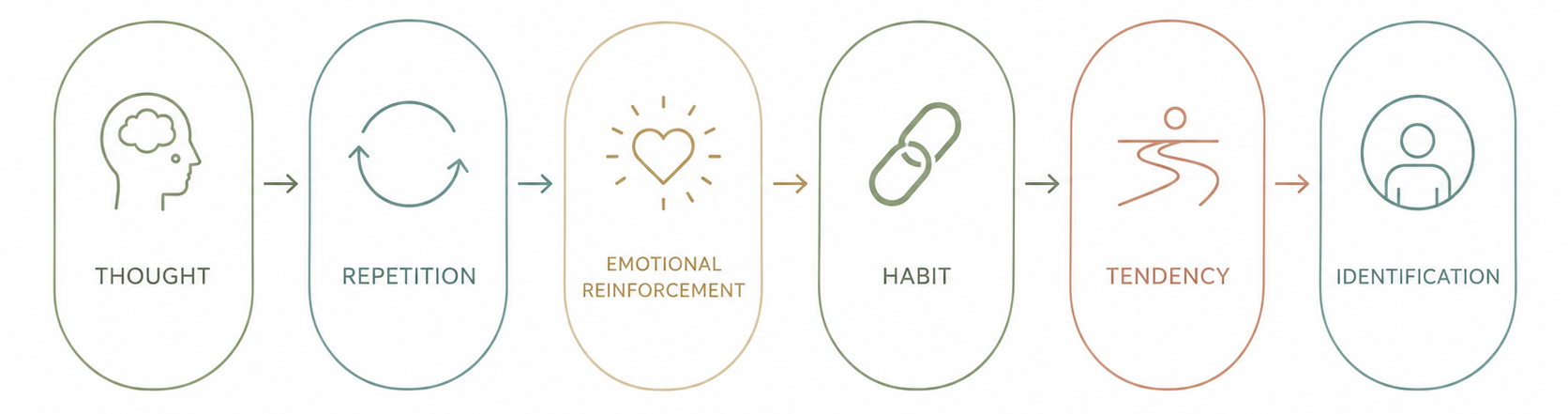
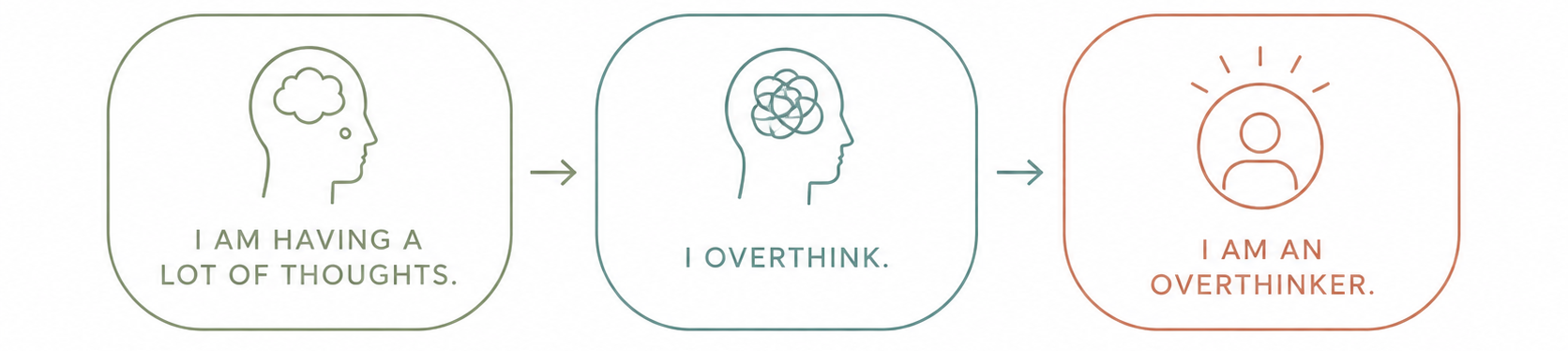
A repeated experience gradually becomes an identity.
The pattern has moved from something we experience into something we believe ourselves to be. The yogic journey begins by creating space between the one who is aware and the pattern being observed.
From Thinking to Feeling
We are often taught:
“Think before you speak.”
“Think before you act.”
There is wisdom in this. But how often are we taught to feel before you speak?
This does not mean reacting impulsively to every emotion. It means recognising that our experience does not exist only in the head.
Fear may appear as tightness in the chest. Anxiety may be felt in the stomach. Anger may come with heat or tension. Sadness may be experienced as heaviness. When everything remains in the mind, we can analyse an emotion for hours without actually experiencing it.
Instead of continually asking:
“Why am I thinking this?” we can begin asking:
“What am I feeling right now—and where do I feel it in my body?” This simple shift from thinking to feeling can make a profound difference.
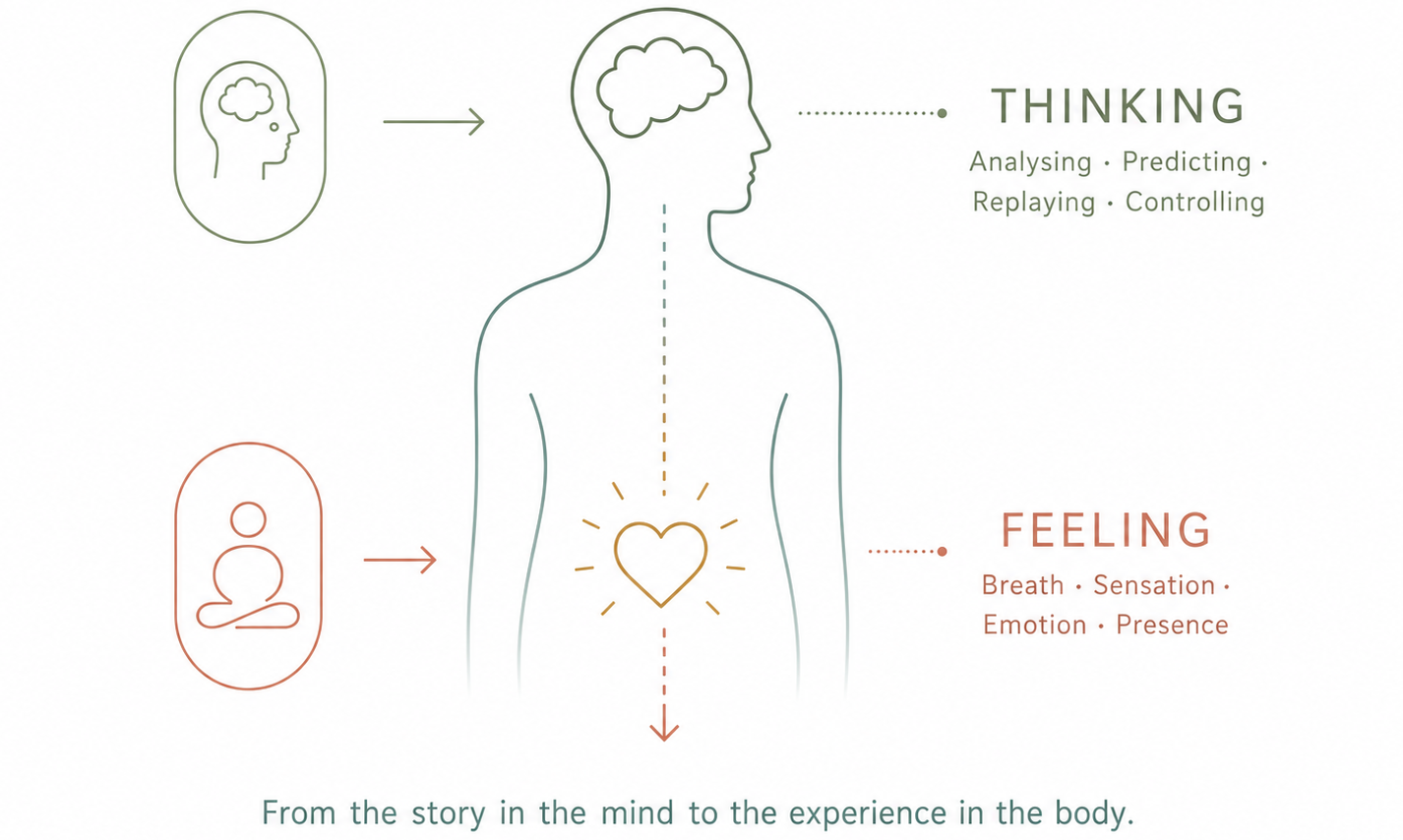
Come Out of the Story and be in the Body
When we are deeply caught in overthinking, the story can become extraordinarily complicated.
There may be dozens of explanations, interpretations, imaginary conversations and possible outcomes. Following every thought can take us deeper into the maze.
Yoga offers another doorway: return to what is happening now.
Feel your feet touching the floor. Notice the movement of the abdomen with your breath. Feel the back of the body supported by the chair or ground. Notice whether the jaw is tense. Feel the chest. Observe the breathing.
Something that appears enormous when experienced only through thought can sometimes become much simpler when experienced through the body.
This is why yoga for overthinking, pranayama, meditation, mindful movement and Yoga Nidra can be valuable practices. They bring awareness away from endless interpretation and towards direct experience.
For those who want to explore the relationship between breath, awareness and the mind more deeply, our 10-Day Pranayama Healing Retreat in Rishikesh combines pranayama, yoga, meditation and Yoga Nidra in an immersive retreat setting.
What Is Beneath the Thought?
Sometimes the emotion we show is protecting something deeper. A person may feel angry, irritated or impatient and spend hours thinking about what other people have done or said. Yet underneath the anger may be fear, hurt, insecurity or the feeling of not being respected or understood.
The anger has become a protective layer.
If we remain only with the story—Why did they do this? Why does this always happen? —the mental loop continues.
But when awareness moves beneath the story, another possibility opens. Instead of asking only what happened, we begin noticing what this experience is doing inside us.
For people who would like to explore emotional patterns in a more individual setting, Yoganga offers a One-to-One Emotional Healing Programme, available online and in Rishikesh.
Simple Yogic Practices for Overthinking
Different situations need different practices. Sometimes we need movement, while at other times we need breathing, stillness or deep relaxation.
Slow the exhalation. Sit or lie comfortably and observe your natural breathing. Without forcing anything, gradually allow the exhalation to become slightly slower and longer. Feel the body as you breathe out.
Develop whole-body awareness. Instead of keeping attention trapped in the head, feel the feet, legs, abdomen, back, shoulders, arms and face. Then experience the whole body together.
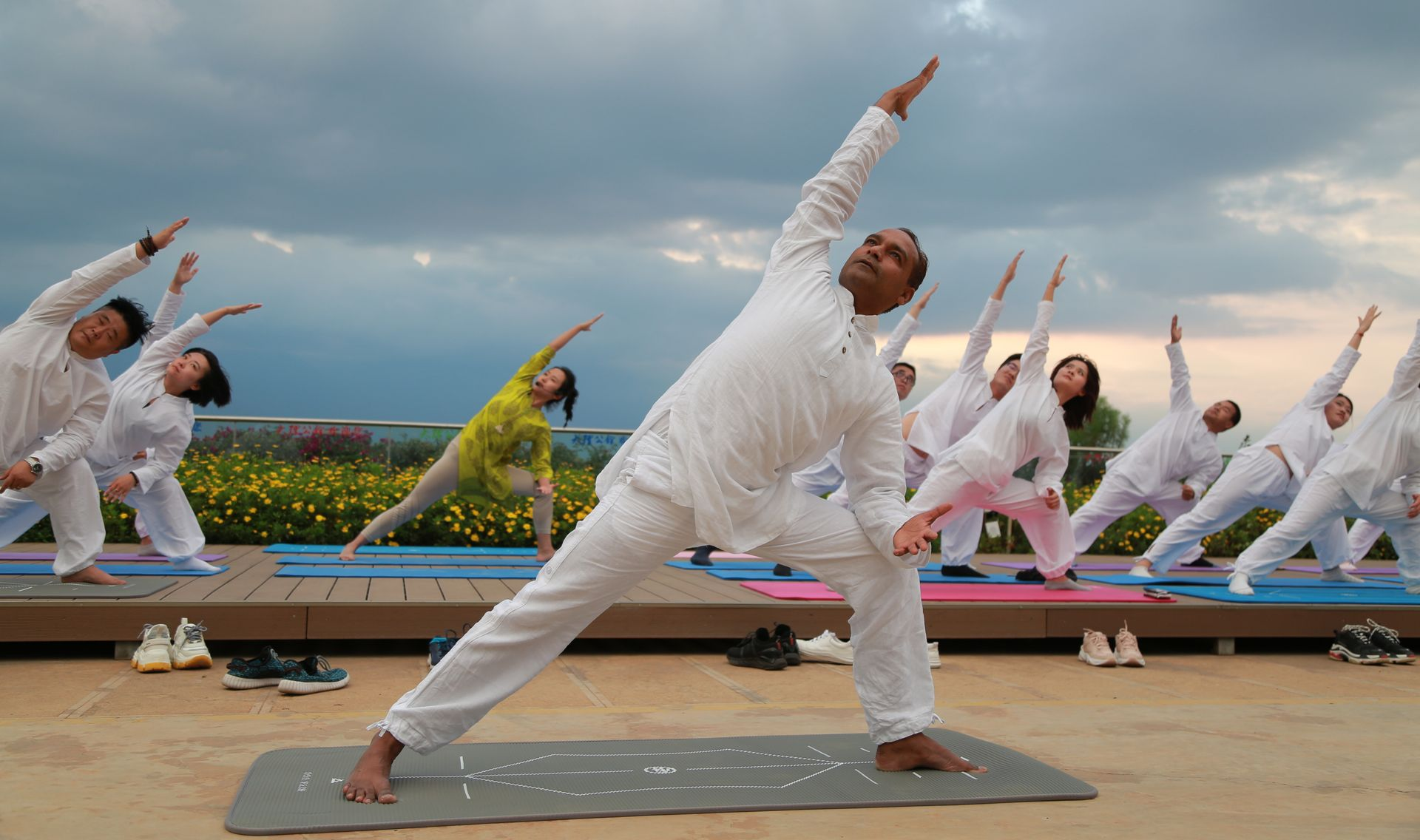
Use mindful movement. When there is too much restlessness to sit quietly, gentle Hatha Yoga can help. Move slowly, coordinate movement with breath and experience the posture instead of mechanically performing it.
Practice Yoga Nidra. In Yoga Nidra, the body rests while awareness remains present. We notice the body, breathing, sensations and thoughts without constantly trying to change them.
Yoga Nidra and Witness Consciousness
Perhaps one of the deepest yogic responses to overthinking is not learning how to create better thoughts.
It is discovering that we are more than our thoughts.
- In Yoga Nidra, we lie still and observe.
- There is a body—and I can notice the body.
- There is a breath—and I can notice the breath.
- There are thoughts—and I can notice the thoughts.
- There are emotions—and I can notice the emotions.
If I can observe a thought, perhaps I do not have to become completely identified with it. This is the beginning of witness consciousness.
Witnessing does not mean becoming emotionally disconnected. It means experiencing what is present without immediately becoming consumed by it.
Gradually:
“I am an overthinker.”
can become:
“Overthinking is happening, and I am aware of it.”
There is freedom in that space.
The original teaching presents Yoga Nidra as an embodied experience of this witness consciousness—observing the body, breath and mind from a place of awareness. Those who would like to explore this practice more deeply can join our 10-Day Yoga Nidra Healing Retreat in Rishikesh.
You Do Not Need to Stop Thinking
The goal is not to become someone who never thinks. Thinking is valuable. Reflection is valuable. Intelligence is valuable.
The difficulty begins when thinking becomes compulsive, repetitive and disconnected from direct experience.
So perhaps the better question is not:
“How do I stop overthinking?”
But:
“How can I return to myself when I become lost in thought?”
Return to the breath.
Return to the body.
Feel.
Observe.
Rest.
Allow awareness to become larger than the thought. As the body, breath and mind begin reconnecting, the endless mental circle can gradually loosen.
And underneath all that activity, we may discover something that was present all along:
Space. Clarity. Presence.
And the quiet awareness capable of witnessing it all.
A Gentle Invitation to Come Back to Yourself
At Yoganga Healing, our approach brings together traditional yoga, pranayama, meditation, Yoga Nidra, body awareness and healing practices to support a deeper relationship with ourselves.
Explore our Yoga and Healing Retreats in Rishikesh, including dedicated Pranayama Healing and Yoga Nidra Healing programmes.
If the mind is constantly active, the answer may not be to think harder.
Sometimes the first step is much simpler.
Feel the breath.
Feel the body.
Observe the mind.
Allow awareness to become larger than the thought.
FAQ's
Can yoga help with overthinking?
Yoga can help redirect attention from repetitive mental activity towards the body, breath and present moment. Hatha Yoga, pranayama, meditation and Yoga Nidra can all support a calmer and more aware relationship with the mind.
Is Yoga Nidra helpful for overthinking?
Yoga Nidra combines physical relaxation with awareness. By observing the body, breath, sensations and thoughts, we practise witnessing mental activity rather than automatically following every thought.
What is vritti in yoga?
In yogic philosophy, vritti refers to movements or fluctuations within the mind. Through awareness and yogic practice, we gradually learn to observe these patterns without becoming completely identified with them.
How can I calm an overactive mind naturally?
Slower breathing, mindful movement, body awareness, meditation, pranayama and Yoga Nidra can help shift attention away from repetitive thinking and back towards direct experience.
New Paragraph
Discover More Articles


Ready to Begin Your Healing Journey?
Discover Peace—Spaces Fill Quickly, So Reserve Today